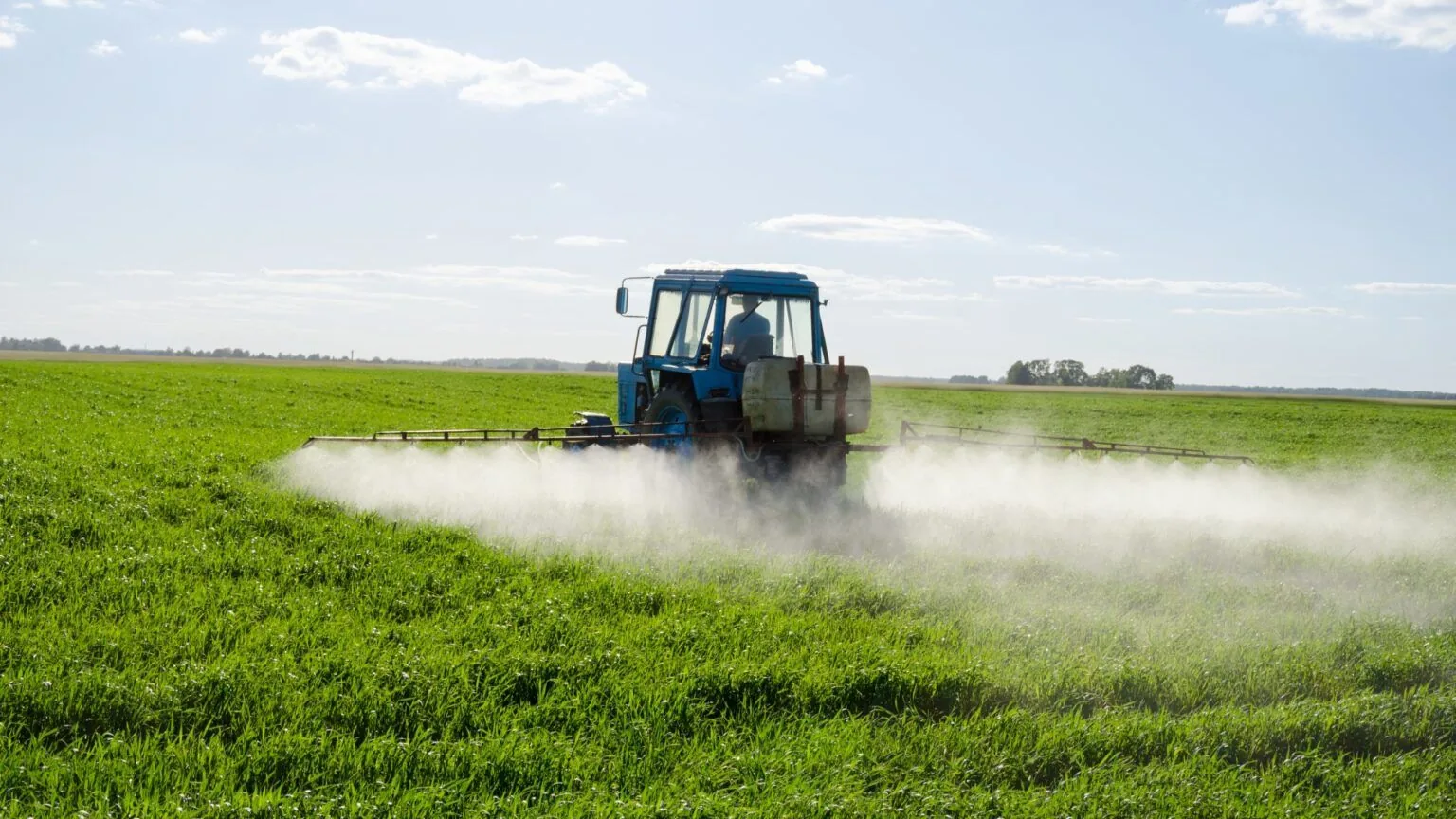
Compound amino acid powder can be incorporated into foliar, fertigation and root-zone programs, but there is no universal application rate for every grade, crop and climate. The correct rate depends on composition, free-amino-acid concentration, salts, crop sensitivity, growth stage, water quality and the other ingredients in the program.
This article provides a safe evaluation framework. It does not replace a locally approved product label, a current TDS or advice from a qualified agronomist.
Start with the exact product
Do not select an application rate from the words “amino acid powder” alone. Confirm:
- total and free amino acids;
- total and organic nitrogen;
- pH and solubility;
- sodium, chloride or other relevant salts;
- raw-material origin;
- hydrolysis process where relevant; and
- current label, TDS and batch COA.
A high-concentration 80% grade should not automatically be used at the same rate as a 35% or 45% grade.
Foliar evaluation
Foliar use places the formulation directly on the leaf surface. Crop safety depends on concentration, spray volume, temperature, humidity, leaf condition, salts and tank-mix partners.
For a new product or crop:
- Follow the locally approved label or current supplier TDS.
- Prepare low, middle and high trial concentrations within the documented range.
- Include an untreated control and, where useful, the current farm program.
- Treat a small number of plants or a small plot first.
- Observe leaf marking, scorch, distortion and delayed injury.
- Record growth and quality measurements rather than relying only on color.
Apply only under conditions permitted by the label. Avoid testing during excessive heat, severe water stress or other conditions that make interpretation difficult.
Fertigation and drip irrigation
For fertigation, dissolution and filtration are as important as crop response.
Check:
- water temperature, hardness and pH;
- concentration in the stock tank and at the emitter;
- insoluble matter and filter requirements;
- interaction with calcium, phosphate and micronutrients;
- precipitation after dilution; and
- emitter performance during and after application.
Flush the system according to the irrigation program and equipment guidance. Do not claim “no drip-line residue” solely from a general solubility statement.
Root-zone and soil application
Root-zone use should be evaluated in relation to soil or substrate properties, irrigation, existing organic inputs and nutrient status. At low application rates, an amino acid powder should not be promoted as materially building soil organic matter.
Possible effects may involve nutrient supply, root-zone microorganisms or plant responses to protein-hydrolysate components. These effects are product- and condition-specific.
Crop and timing considerations
Many crops can be included in trials, including vegetables, fruit crops, cereals, turf, ornamentals and greenhouse crops. The question is not simply which crops “benefit most.” A useful trial identifies a specific objective and timing.
| Trial objective | Possible timing to evaluate | What to measure |
|---|---|---|
| Establishment | After transplanting or early vegetative growth | Survival, root mass, early biomass, crop safety |
| Nutrient-use support | During active growth alongside the normal nutrient program | Tissue nutrients, growth, yield, nutrient input |
| Abiotic-stress support | Before or after a defined stress event, where appropriate | Recovery, leaf damage, biomass and yield |
| Reproductive growth | Flowering or fruit development | Fruit set, size, quality and marketable yield |
| Quality formulation | Crop-specific quality stage | Brix, firmness, color, shelf-life method and yield |
Do not promise a result merely because the product is applied at one of these stages.
Tank-mix compatibility
“Compatible with most fertilizers” is not a sufficient instruction. Compatibility changes with concentration and mixing order.
Before mixing:
- read all labels and technical documents;
- confirm that the combination is legally permitted;
- use the actual water and intended concentrations;
- mix a small sample in the planned order;
- observe heat, gas, foam, sediment, separation and pH; and
- repeat the observation after the expected holding period.
Concentrated calcium and phosphate, strong alkaline materials, copper products and some crop-protection products require particular care. A successful jar test does not replace a small crop-safety test.
How to design a useful field trial
A credible field trial should include:
- a clearly defined product and batch;
- a documented base fertilizer program;
- untreated or current-practice controls;
- replicated treatments;
- equal water and management across treatments;
- measurements selected before the trial; and
- economic evaluation, not only visual observations.
Run the trial under more than one condition before making a general performance claim.
How to determine dosage
Use this order of priority:
- locally approved label;
- current TDS for the exact grade;
- qualified local agronomic advice;
- small-scale crop-safety and compatibility testing; and
- replicated field validation.
Published internet rates should be treated as background information, not instructions for a different product.
Conclusion
The safest and most useful application guidance is product-specific. Verify the composition, test the formulation in actual water, check crop safety and measure the response against a control.
Reference
Need Help Selecting the Right Grade?
Our technical team will recommend the optimal amino acid purity and formulation for your crops and market.