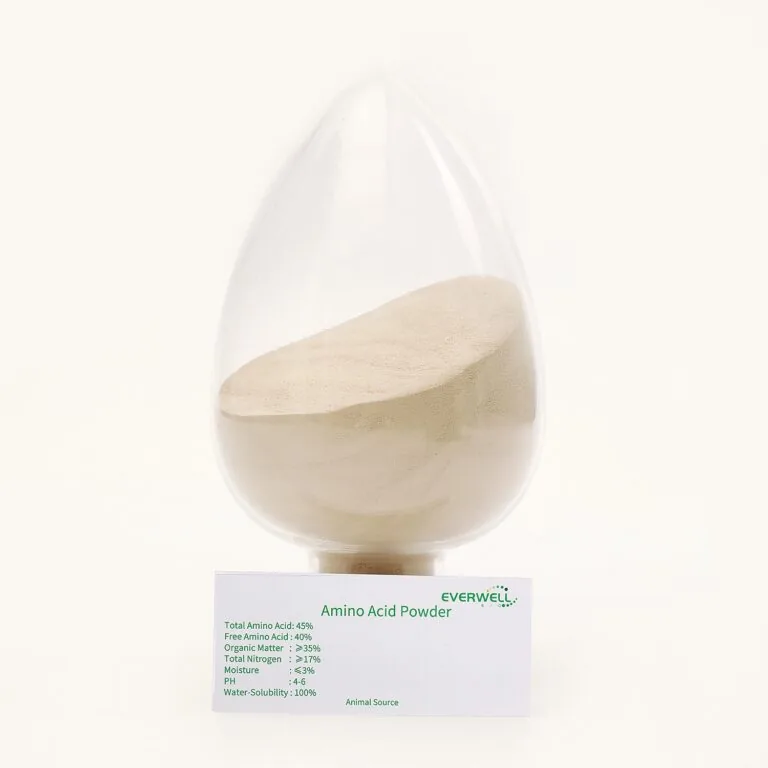
Some protein hydrolysates have been investigated for responses to nonfreezing cold stress. That evidence does not establish that every amino acid powder prevents frost injury or rescues a frozen crop. Buyers should match the exact formulation, crop, exposure and application timing to the evidence before using a cold-stress claim in a purchase decision.
Chilling, freezing and recovery are different claims
| Claim | Evidence to request | Decision limit |
|---|---|---|
| Support during chilling | Trials documenting nonfreezing temperatures, exposure duration and the specific crop | A result cannot automatically be transferred to freezing exposure |
| Frost protection | Evidence measuring relevant freezing injury and survival under specified conditions | An antioxidant measurement alone does not establish a frost-protection claim |
| Recovery after injury | Trials beginning treatment after injury, with an untreated recovery comparison | Preventive treatment evidence does not establish rescue of damaged plants |
What a cucumber study supports—and what it leaves open
Harizanova and colleagues studied a named commercial protein hydrolysate on young cucumber plants. Treatment preceded nonfreezing chilling, followed by a recovery period. The researchers examined growth and biochemical responses and reported indications of reduced oxidative injury. The experiment supports investigating the tested formulation under those conditions; it does not test EverwellBio material, frost protection across crops, or a universal amino acid application rate. Read the original study.
When reviewing a paper, record the tested product and composition, cultivar, plant age, exposure conditions, application route and comparison treatments. Keep physiological measurements separate from survival, marketable yield and commercial return. Ask whether the outcome that matters to your buyer was actually measured.
What to request from a supplier
- A current specification and batch-linked COA stating analytical methods and reporting basis.
- Clear identification of total versus free amino acids and relevant mineral constituents.
- The complete trial protocol supporting any cold-related statement.
- Product-specific application instructions for the proposed crop and route.
- A sample of the intended grade for formulation and compatibility screening.
Do not qualify a material solely by an AA35, AA45 or AA80 grade name. A result for one formulation is not evidence for another material with a similar total amino acid percentage. For document review, use the amino acid COA checklist.
Design an evaluation that answers a buying question
First define the decision: supplier qualification, formulation choice or a specific crop application. Agree on the primary outcome before starting. Record product lots, water, dose units, timing, exposure and all other inputs. Include a comparison receiving the same management without the test product, and use replicated units where practical. Photograph treatments consistently and record adverse responses as well as apparent benefits.
Evaluate physical compatibility separately from crop response. A clear jar test cannot establish cold tolerance, and a crop response does not establish concentrate storage stability. Review the mixing compatibility guide before combining inputs.
Questions buyers ask
Does an amino acid percentage prove cold-stress performance?
No. Require evidence for the particular product, crop, exposure and application program.
Can the cucumber-study dose be used for another powder?
The study does not establish a transferable dose. Use product-specific instructions and an application-specific evaluation.
Does pretreatment research prove recovery after frost?
No. Pretreatment, post-injury recovery and freezing protection require different experimental evidence.
Sources and next steps
Harizanova et al. (2022), Acta Agrobotanica, DOI: 10.5586/aa.756